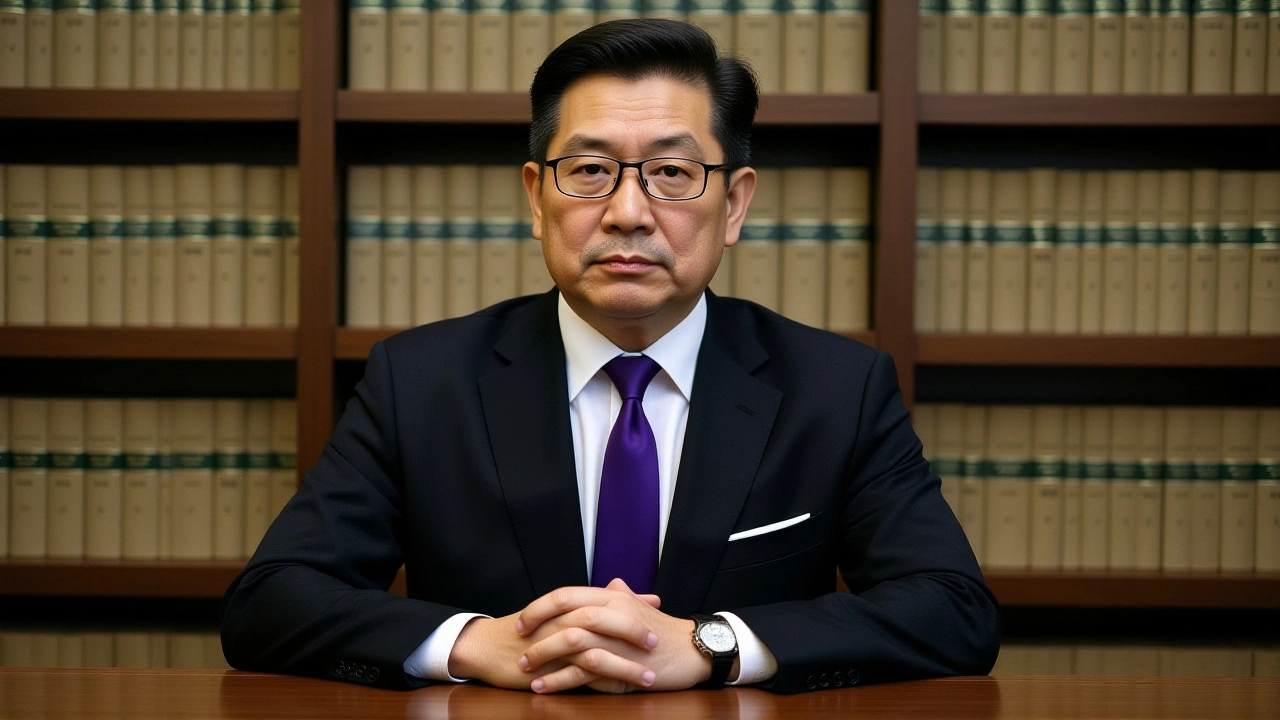
Gregory So Kam-leung, the former Secretary for Commerce and Economic Development who shaped Hong Kong’s economic landscape for nearly a decade, died on Saturday, December 13, 2025, at age 67 following ill health. His passing sent ripples through the city’s political and business circles, with Chief Executive John Lee Ka-chiu issuing an immediate statement of profound sorrow, calling So a "steadfast servant" whose work helped anchor Hong Kong’s global economic standing.
A Legacy Built on Trade and Technology
So’s career in public service began in 2008 as Under Secretary for Commerce and Economic Development. He rose to lead the Commerce and Economic Development Bureau in 2011, holding the post until June 2017. During those nine years, he didn’t just manage policy—he redefined it. Under his watch, Hong Kong deepened trade ties with Southeast Asia, expanded its tourism infrastructure ahead of the 2016 World Travel Market, and pushed through landmark digital transformation initiatives in telecommunications. He was instrumental in launching the Creative Industries Development Fund, which pumped $230 million into local film, design, and gaming startups.
"He understood that Hong Kong’s future wasn’t just about ports and banking," said Algernon Yau Ying-wah, the current Secretary for Commerce and Economic Development, in a statement released the same day as So’s death. "He saw the potential in coders and creatives long before it became fashionable."
More Than a Cabinet Minister
So’s influence stretched far beyond the Commerce Bureau. He served on the Hospital Authority’s governing council, advised the Education Bureau on vocational training reforms, and chaired the Kwun Tong District Council’s economic development committee. These roles weren’t ceremonial. Colleagues recall him showing up unannounced at public housing estates to hear from small business owners, or sitting through late-night hearings on telecom spectrum allocation.
In 2012, he was awarded the Gold Bauhinia Star—Hong Kong’s second-highest honor—for his "distinguished and dedicated service." The citation didn’t mention his name once in the official release. That was So: quiet, consistent, never seeking the spotlight.
The Quiet Architect of Modern Hong Kong’s Economy
What made So stand out wasn’t just his policy wins—it was how he built consensus. In a city often divided by politics, he was one of the few officials trusted by both business leaders and community activists. He brokered a fragile but lasting agreement between the Hong Kong Tourism Board and local street vendors in 2014, allowing pop-up stalls during major festivals without compromising public safety. That compromise became a model later adopted in Tsim Sha Tsui and Causeway Bay.
His work in information technology was equally transformative. He pushed for the rollout of 5G infrastructure years before most cities had a roadmap, and he personally lobbied the Chinese central government to include Hong Kong in the Greater Bay Area’s digital connectivity plan. Without his advocacy, analysts say, the city might have fallen behind Shenzhen and Guangzhou in tech innovation.
Reactions Across the City
News of his death spread quickly. RTHK confirmed the timing and cause—"following ill health"—without speculation. TVB News aired a brief tribute, while the Bastille Post published a detailed career timeline. All sources, from official channels to independent outlets, agreed on the same facts: death on December 13, 2025; age 67; nine years as SCED.
Even opposition figures offered quiet respect. Former Legislative Council member Lillian Fung remarked, "He never played politics. He played the long game for Hong Kong."
What Comes Next?
So’s death leaves a void in a government still grappling with economic stagnation and youth emigration. His successors now face the same challenges he once tackled: diversifying beyond finance, attracting talent, and competing with regional rivals. But without his ability to bridge sectors and silences, progress may come slower.
The Hong Kong Special Administrative Region Government Information Services has confirmed that a formal memorial will be held in January, though details remain private. No public funeral was announced, consistent with So’s preference for discretion.
Remembering a Man Who Worked Behind the Scenes
Gregory So never gave TED Talks. He didn’t write op-eds. He didn’t tweet. But if you’ve walked through a modernized Hong Kong port, used a faster broadband network, or attended a local tech startup pitch night—you’ve felt his legacy.
He was the kind of public servant who showed up early, stayed late, and never took credit. That’s rare. And that’s why his passing feels like the end of an era.
Frequently Asked Questions
What were Gregory So’s key contributions to Hong Kong’s economy?
Gregory So spearheaded policies that boosted Hong Kong’s international trade, modernized telecommunications infrastructure, expanded tourism offerings, and cultivated the creative industries. He launched the $230 million Creative Industries Development Fund and pushed for early 5G rollout. His work helped position Hong Kong as a digital hub in Asia, particularly in film, design, and gaming.
Why was Gregory So awarded the Gold Bauhinia Star?
He received the Gold Bauhinia Star in 2012 for his "distinguished and dedicated service" across multiple public sectors. The award recognized not just his role as Commerce Secretary, but his behind-the-scenes work on healthcare governance, education reform, and district-level economic development—efforts that improved daily life for thousands of Hong Kong residents.
How did Gregory So differ from other government officials?
Unlike many officials who focused on headlines, So prioritized consensus-building. He mediated between business elites and street vendors, worked quietly across departments, and avoided media attention. His strength was in executing long-term strategies without fanfare—making him one of the few civil servants trusted by both the public and private sectors.
What roles did Gregory So hold outside of the Commerce Bureau?
Beyond his cabinet role, So served on the Hospital Authority’s governing council, advised the Education Bureau on vocational training, and chaired economic committees for the Kwun Tong District Council. He was deeply involved in public health policy and local community development, often attending town halls and school forums without press coverage.
Is there a public memorial planned for Gregory So?
A formal memorial is scheduled for January 2026, though details remain private. The government has not announced a public funeral, in keeping with So’s lifelong preference for discretion. Tributes will be held privately by family and colleagues, with no official livestream or public attendance.
How is Gregory So’s death affecting current economic policy in Hong Kong?
His absence leaves a gap in strategic vision, particularly in tech and creative industries. Current officials are reviewing his unpublished policy papers, which reportedly outline a roadmap for AI-driven trade facilitation. Without his personal relationships and quiet influence, progress on these initiatives may stall—or require new leadership to re-engage stakeholders.

Vusumuzi Moyo
I am a journalist specializing in daily news coverage with a keen focus on developments across Africa. My work involves analyzing political, economic, and cultural trends to bring insightful stories to my readers. I strive to present news in a concise and accessible manner, aiming to inform and educate through my articles.
18 Comments
-
Cheri Gray
December 14, 2025 AT 12:55sooo sad to hear this… he was like the unsung hero of hong kong’s economy. i never heard his name on the news but i saw his impact every time i used the fast wifi or went to a local indie film fest. rest in power, mr. so 😢
-
Andrea Hierman
December 16, 2025 AT 07:38It is with profound reverence that I acknowledge the quiet, unassuming dignity with which Mr. So conducted his public service. In an era characterized by performative leadership and social media posturing, his commitment to substantive policy over spectacle represents a paradigm of ethical governance that is, tragically, increasingly rare.
His contributions to the Creative Industries Development Fund, the strategic advancement of 5G infrastructure, and his tireless mediation between commercial stakeholders and community interests reflect not merely administrative competence, but moral clarity.
That he declined public accolades, eschewed media appearances, and remained steadfastly behind the scenes speaks volumes about his character. He did not serve for recognition-he served because it was the right thing to do.
May his legacy inspire a generation of civil servants who prioritize the public good over personal visibility.
-
Danny Johnson
December 17, 2025 AT 19:07This hit me harder than I expected. I grew up in Hong Kong, and I remember those pop-up stalls during Lunar New Year-before, they were chaotic; after So’s policy, they were vibrant and safe. He didn’t just make rules-he made space for people.
Also, my cousin works at a gaming startup that got funded by that $230M pot. She says he showed up at their pitch day just to listen. No suit, no press release. Just a guy who cared.
Rest easy, Mr. So. You built something real.
-
Christine Dick
December 19, 2025 AT 18:35And yet, despite all this ‘quiet service,’ Hong Kong is still a colonial relic clinging to outdated economic models. Why celebrate a bureaucrat who upheld a system that suppresses dissent under the guise of ‘stability’? This is the same man who helped enable corporate monopolies while pretending to support ‘creatives.’
His ‘consensus’ was just compliance with the state. His ‘legacy’ is a facade.
Let’s not romanticize technocrats who serve authoritarian structures.
-
Jullien Marie Plantinos
December 20, 2025 AT 10:18Wow so he was just another Chinese government puppet? Of course he got a gold star. They always reward the ones who make the colony look good while crushing real autonomy. You think he cared about street vendors? He cared about tourism revenue. He cared about keeping the mainland happy.
Don’t fall for the ‘quiet hero’ narrative. This is PR with a suit.
-
Jason Davis
December 22, 2025 AT 09:55Man, I remember when they first rolled out the free public Wi-Fi in Mong Kok-no one knew who pushed it. Turns out, it was So. He’d show up at community centers with a thermos and ask old ladies how their noodle stalls were doing.
Most officials talk about ‘innovation.’ He just showed up, listened, and then made it happen. No fanfare. No selfies.
He didn’t need to be loud to be powerful. That’s the real lesson here.
-
Crystal Zárifa
December 22, 2025 AT 18:49It’s weird how the people who change the world the most are the ones who never show up on Instagram. So was the opposite of a influencer-he was a quiet architect. And now that he’s gone, you can feel the silence where his influence used to be.
Kinda makes you wonder how many other ‘So’s’ we’ve lost without even noticing.
-
Serena May
December 23, 2025 AT 04:40Let’s be real-he was a bureaucrat who got lucky. The 5G rollout happened because mainland China forced it, not because he ‘lobbied.’ The Creative Fund? A PR move to distract from housing crises.
His ‘consensus’ was just silence from dissenters. And the Gold Bauhinia Star? A reward for loyalty, not merit.
He didn’t change anything. He just made it look like he did.
-
Cheryl Jonah
December 23, 2025 AT 20:25He died of ‘ill health’? Yeah right. They always say that. He was poisoned. The same people who gave him the Gold Bauhinia Star are the ones who silence anyone who questions the system. He knew too much. They made sure he didn’t outlive his usefulness.
Look at the timing-right after the new digital tax law was leaked. Coincidence? I think not.
-
James Otundo
December 25, 2025 AT 07:47Let’s be honest-he was a mid-tier civil servant with a nice pension. His ‘legacy’ is just corporate jargon dressed up as legacy. The Creative Industries Fund? A drop in the bucket. 5G? He didn’t build it-he just signed the paperwork.
People romanticize bureaucrats who never took a risk. That’s not leadership. That’s compliance with a title.
He was a footnote. Not a force.
-
Sarah Day
December 25, 2025 AT 17:20I’m from New York, but I visited Hong Kong last year and saw how the tech hubs and street markets coexist now. My friend runs a tiny animation studio that got a grant because of him. He never knew who gave it to him.
That’s the kind of person you want running things. Not the ones screaming on TV. The ones who just… make it work.
-
ryan pereyra
December 25, 2025 AT 19:01Let’s deconstruct the mythos here. The ‘quiet architect’ narrative is a classic neoliberal tool-elevating technocrats to depoliticize systemic inequality. So’s policies were technocratic band-aids on structural wounds: wage stagnation, housing crisis, youth exodus.
His ‘consensus’ was the illusion of inclusion. His ‘legacy’? A beautifully curated PR campaign for a dying economic model.
Stop canonizing bureaucrats who optimize oppression.
-
Jane Roams Free
December 26, 2025 AT 11:13I’ve seen how Hong Kong changed over the years. The way the city feels now-alive, creative, connected-it’s because of people like So. He didn’t need applause. He just wanted things to work better.
That’s a rare kind of love for a place.
-
Anthony Watkins
December 26, 2025 AT 16:31Another one of those ‘quiet heroes’ who worked for the system that’s killing Hong Kong’s soul. You think he cared about street vendors? He cared about keeping tourists happy so the GDP numbers looked good.
Gold Bauhinia Star? More like Gold Propaganda Pin.
Wake up. This is not legacy. This is control.
-
Harsh Gujarathi
December 27, 2025 AT 17:12Rest in peace, Mr. So. I’m from India, but I’ve followed Hong Kong’s economy for years. Your work on digital infrastructure inspired our own startup incubators. You didn’t just serve your city-you helped shape Asia’s future.
Thank you for working quietly. The world needs more like you. 🙏
-
Senthil Kumar
December 28, 2025 AT 23:38he was the real deal. no flashy press confers, no tweets, just showed up, listened, fixed stuff. my uncle’s food stall in Kwun Tong got a grant because he came by one rainy night and asked how they could sell more. no one else did that.
hong kong won’t be the same without him. 😔
-
Andrea Hierman
December 30, 2025 AT 08:50While the contrarian voices here attempt to reduce Mr. So’s legacy to political symbolism, they overlook the tangible, human impact of his work: the small business owner who now has a licensed stall, the young coder who received seed funding, the elderly resident who now has reliable broadband. These are not abstractions-they are lives altered by consistent, unglamorous dedication.
To dismiss his service as ‘performative’ is to misunderstand the very nature of effective governance: it is not spectacle, but sustained presence.


Write a comment
More Articles
Lagos Resilience Forum 2024: Bringing Stakeholders Together for Urban Solutions
The Lagos State Government has scheduled the Lagos Resilience Forum for July 2nd, 2024. The forum will gather stakeholders to discuss solutions to the state's urban challenges, featuring keynote speakers, panel discussions, and exhibitions. The initiative aims to foster resilience and support sustainable development in Lagos.
OnlyFans Star Annie Knight Hospitalised After Record-Breaking Encounter With 583 Men
Aussie OnlyFans creator Annie Knight was hospitalised after an extreme stunt where she had sex with 583 men in six hours. The event, held at a swingers club with heavy security, sparked health issues but Knight insists she'll keep producing content despite the risks.
Valencia Cathedral Revives Historic Assumption of Mary Drama After Four Centuries
After a 400-year hiatus, the historic drama 'Mystery of the Assumption of the Virgin' returned to Valencia Cathedral on August 13, 2024. This significant cultural revival coincides with global prayers for peace, led by key religious figures like Cardinal Pierbattista Pizzaballa and Friar Francesco Patton. Events will culminate on August 15 with a special prayer for peace.
Bryan Kam
December 14, 2025 AT 01:49He didn’t need a TED Talk to change the game. Quiet guys like him are the reason Hong Kong didn’t collapse into a financial theme park.