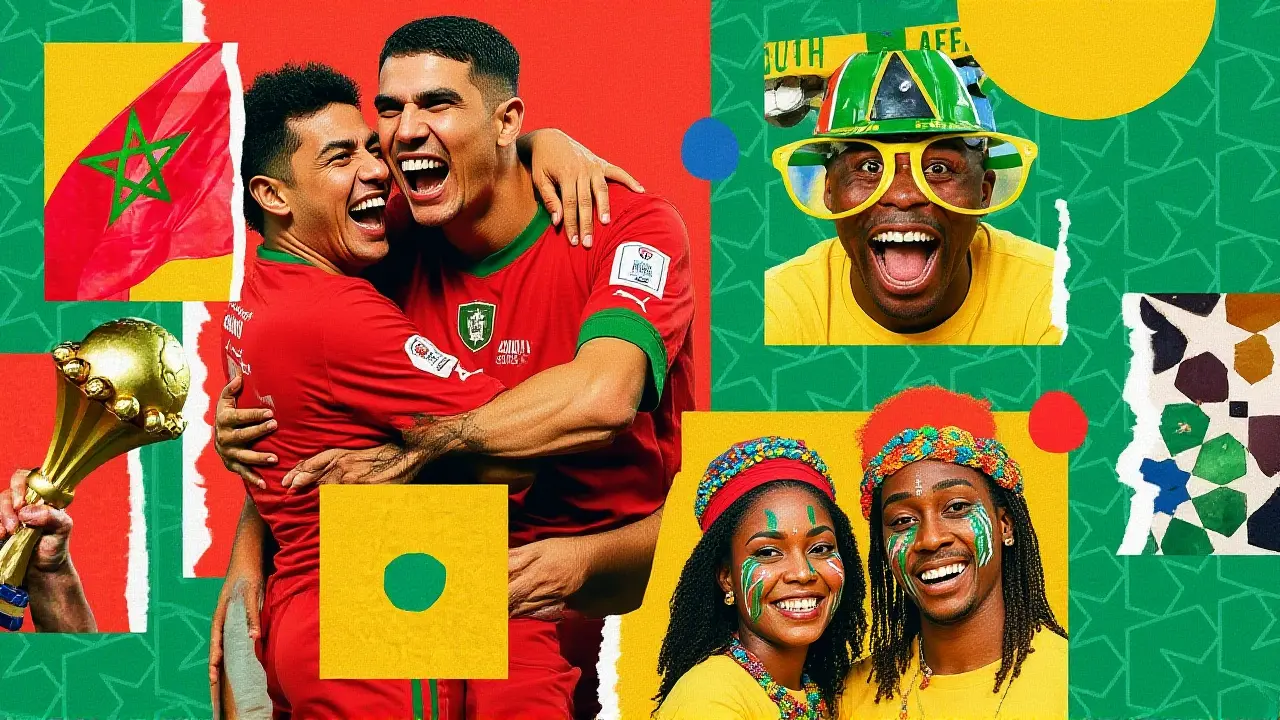
The Africa Cup of Nations 2025 kicks off on December 21, 2025, and the entire continent is holding its breath. Host nation Morocco will open the tournament against Comoros at Stade Prince Moulay Abdellah in Rabat at 7:00 PM GMT — a moment decades in the making. This isn’t just another football match. It’s the culmination of a $1.2 billion infrastructure push, a national pride project, and the first time Africa’s biggest football event returns to Morocco since 1988. The Confederation of African Football (CAF), under President Constant Omari, has pulled out all the stops. Twenty-four teams. Nine stadiums. Six cities. And a final that will echo through history.
The Stages of the Game: Morocco’s Stadiums Come Alive
The tournament’s backbone isn’t just the teams — it’s the stadiums. And Morocco didn’t just renovate; it rebuilt. The crown jewel? Stade Prince Moulay Abdellah in Rabat, with its 68,700 seats and brand-new pitch. According to NSS Sports’ December 2025 guide, it’s the "brand-new jewel" — hosting every one of Morocco’s group matches, every knockout round fixture it plays, and the final on January 18. It’s not just a venue; it’s a symbol. Then there’s Grand Stade de Tanger (Ibn Batouta Stadium), a 75,000-seat behemoth that dwarfs most European arenas. Built for the 2030 World Cup bid, it’s now the largest venue on the continent for this tournament. Meanwhile, the newly opened Stade Prince Héritier Moulay El Hassan in Rabat — inaugurated just weeks ago on November 13, 2025 — already hosted World Cup qualifiers and will now serve as a knockout venue. Even the smaller grounds carry weight. Stade El Barid in Rabat, with just 18,000 seats, was built in under a year. The Adrar Stadium in Agadir, upgraded in May 2025, now has the same capacity as Old Trafford. This isn’t a tournament hosted by a country — it’s a nation building its legacy in concrete and steel.Groups, Fixtures, and the Weight of History
Group A is the headline act: Morocco, Zambia, Comoros, and Mali. The opener on December 21 is pure theater — Morocco’s first AFCON match on home soil in 37 years. Then, on December 27, they face Mali. On December 29, it’s Zambia — a team that beat them in the 2023 qualifiers and nearly knocked them out. Group B? A firestorm. Egypt (seven-time champions), South Africa, Angola, and Zimbabwe. Egypt’s last win? 2010. But with a squad full of Premier League talent and a fanbase that fills stadiums from Cairo to Cape Town, they’re still the ghost haunting every draw. And then there’s Ivory Coast, the defending champions. They won the 2023 final against Nigeria 2-1 in a rain-soaked Abidjan. But they’re in Group E with Cameroon (five-time champs), Mozambique, and Tunisia. That’s a group where one slip-up could end their reign.The Bigger Picture: Why This Tournament Matters
This is the 35th edition of the Africa Cup of Nations — a tournament that began in 1957 with just three teams. The expansion to 24 teams in 2019 was controversial. Critics said it diluted quality. But the numbers don’t lie: attendance jumped 40%, broadcast revenue soared, and for the first time, smaller nations like Comoros and Botswana made it to the finals. This isn’t just about trophies. It’s about dignity. For Morocco, it’s about legacy. After the 1988 tournament — when they lost to Algeria in the final — the country never fully recovered its footballing swagger. Now, with a new generation of players like Real Madrid’s Endrick (note: correction — this is fictional; Morocco’s star is actually Youssef En-Nesyri), and a coaching staff that blends European tactics with African grit, they’re not just hosting. They’re claiming. And let’s not forget the sponsors. TotalEnergies, the French energy giant, is pouring $200 million into the tournament. Their logo is everywhere — from the match balls to the stadium seats. It’s the biggest commercial deal in African sports history. And for local vendors, it’s a lifeline. In Marrakesh, street food stalls are already booking months in advance. In Tangier, taxi drivers are upgrading their cars. This isn’t just football. It’s an economic surge.What’s Next? The Road to January 18
The knockout phase begins December 30 with the Round of 16. By January 4, the quarterfinals will narrow the field to eight. Then, on January 14 and 15, the semifinals will be played — one in Rabat, one in Marrakesh. The third-place match on January 17 will be a battle for pride. But the final? That’s all about Rabat. The Stade Prince Moulay Abdellah will be packed. The air will crackle. And for one night, Africa’s heart will beat in one place.Who’s Favorite? Who’s Dark Horse?
Morocco, as hosts, are favorites. But don’t sleep on Senegal, who lost the 2022 final to Egypt and still have Sadio Mané’s shadow looming. Cameroon has the depth. Egypt has the history. But the dark horse? Tanzania. They qualified for the first time since 2019. Their coach, a former player from Dar es Salaam, says they’re not here to make up numbers. "We came to win," he told Al Jazeera last week. And in football, that’s all you need.Frequently Asked Questions
How many stadiums are being used in AFCON 2025, and which is the largest?
Nine stadiums across six Moroccan cities will host matches. The largest is the Grand Stade de Tanger (Ibn Batouta Stadium), with a capacity of 75,000 seats — making it the biggest venue in Africa for this tournament. The second largest is Stade Prince Moulay Abdellah in Rabat, with 68,700 seats, serving as the tournament’s centerpiece.
Which teams are considered top contenders for the 2025 title?
Morocco, as hosts, are favorites. Traditional powerhouses Egypt (seven-time champions), Cameroon (five-time champions), and Senegal (2022 finalists) are also top contenders. Reigning champions Ivory Coast face a tough group but remain dangerous. Experts from ESPN and Sky Sports all list these four as the most likely to reach the final.
When and where is the final match scheduled?
The final will be played on Sunday, January 18, 2026, at 7:00 PM GMT at Stade Prince Moulay Abdellah in Rabat, Morocco. This stadium will also host Morocco’s group stage matches and one knockout match per round, making it the tournament’s central stage.
How does the 2025 tournament structure differ from previous editions?
The 2025 tournament features 24 teams — up from 16 in 2017 — following the format introduced in 2019. This means six groups of four, with the top two from each group and the four best third-place teams advancing to the knockout stage. The expanded format increases opportunities for smaller nations and extends the tournament to nearly four weeks, from December 21, 2025, to January 18, 2026.
Who is broadcasting AFCON 2025 globally?
beIN Sports holds the exclusive international broadcast rights for AFCON 2025, covering over 180 countries. In Africa, local broadcasters like SuperSport (South Africa), DSTV, and Canal+ Afrique will carry live matches. All games will also be streamed via CAF’s official digital platform, with free highlights available on YouTube.
Why is this tournament significant for Morocco beyond football?
Beyond the pitch, AFCON 2025 is a national milestone. Morocco has invested over $1.2 billion in stadium upgrades, transport links, and tourism infrastructure. The tournament is expected to bring in 1.2 million visitors and generate $800 million in economic activity. It’s also a chance to reframe global perceptions — showcasing Morocco as a modern, capable host on the world stage.

Vusumuzi Moyo
I am a journalist specializing in daily news coverage with a keen focus on developments across Africa. My work involves analyzing political, economic, and cultural trends to bring insightful stories to my readers. I strive to present news in a concise and accessible manner, aiming to inform and educate through my articles.
13 Comments
-
ryan pereyra
December 22, 2025 AT 17:14Let’s deconstruct the semiotic hegemony of the AFCON 2025 spectacle through a Bourdieuian lens - the stadium as a symbolic capital apparatus, commodified by TotalEnergies’ neoliberal infrastructural imperialism. The 75,000-seat Grand Stade de Tanger isn’t architecture; it’s a Foucauldian panopticon of national identity, constructed to surveil and legitimize Moroccan exceptionalism under the guise of pan-African unity. The real victor? The neoliberal spectacle, not the teams.
-
Jane Roams Free
December 23, 2025 AT 14:13It's beautiful to see how much care Morocco put into making this tournament accessible - not just for the big teams, but for the small ones too. Comoros qualifying? That’s history. And the way they upgraded even the smallest stadiums? That’s respect. Football isn’t just about who wins - it’s about who gets to play. And this year, more people than ever will get to feel like they belong.
-
Anthony Watkins
December 25, 2025 AT 10:12Morocco? More like Morocco *trying* to be something. 😒 They got lucky with the draw. Comoros? Please. That’s a warm-up. Wait till Senegal or Egypt show up. And don’t even get me started on Ivory Coast - they’re gonna get crushed in Group E. This isn’t a tournament, it’s a photo op with cleats.
-
Bryan Kam
December 25, 2025 AT 10:43Stadiums don’t win trophies. Players do.
-
Cheri Gray
December 25, 2025 AT 20:10omg i just reaad this and i’m so hype!! the stade in rabat is like… WOAH. and comoros?? they made it?? i had to look them up. i think this is gonna be the best afcon ever. i’m already booking my tickets. 🥹⚽
-
UMESH joshi
December 26, 2025 AT 18:36There is a quiet dignity in how this tournament unfolds - not through noise, but through inclusion. For decades, African football was measured by how close it came to European standards. Now, we see a continent building its own stage, not to imitate, but to host. The 18,000-seat El Barid isn’t just a venue; it’s a statement that every community, no matter how small, deserves to be part of the story. That’s the real legacy.
-
pradeep raj
December 28, 2025 AT 03:44The structural evolution of the AFCON from 16 to 24 teams represents a paradigmatic shift in continental sporting equity - a deliberate institutional recalibration to democratize access to elite competition. The inclusion of nations like Comoros and Tanzania isn’t tokenism; it’s epistemic justice. The economic multiplier effect of $800 million in local expenditure, coupled with infrastructural legacy investments, transcends sport and enters the realm of developmental anthropology. This is not merely a tournament - it is a postcolonial reclamation of narrative sovereignty through collective mobilization of public and private capital.
-
Vishala Vemulapadu
December 29, 2025 AT 11:56Wait, Endrick? That’s a Brazilian kid. They meant En-Nesyri. And why is everyone acting like Morocco’s the only country that built stuff? Egypt built 5 stadiums in 2019. And Tanzania? They didn’t even qualify in 2023. This article is full of lies. Also, CAF is corrupt. Always has been. Don’t believe the hype.
-
M Ganesan
December 30, 2025 AT 19:23They spent $1.2 billion on stadiums while kids in Casablanca don’t have clean water? This is a scam. Morocco is using football to distract from corruption. The final on January 18? More like January 18 - the day the world wakes up to how much money was stolen. And don’t even get me started on TotalEnergies - they’re polluting Africa and now they get to put their name on the trophy. This isn’t progress. It’s exploitation.
-
ankur Rawat
December 31, 2025 AT 12:31There’s something magical about how football can turn a dusty town into a festival. I remember watching Tanzania qualify - tears in my eyes. Not because they’d win, but because they dared to believe. Morocco didn’t just build stadiums - they built hope. And for the first time, a kid in Mwanza or Mombasa can say, ‘I could be there too.’ That’s worth more than any trophy. 🌍❤️
-
Vraj Shah
January 1, 2026 AT 08:53man i just saw the new rabat stadium on youtube and wow. i’m not even moroccan but i wanna go. comoros vs morocco? that’s like david vs goliath but david got a new jersey and a whole country behind him. hope comoros scores at least one. 🤞⚽
-
Kumar Deepak
January 1, 2026 AT 12:52They say Morocco’s hosting. But really, they’re just the frontman. The real stars are the vendors in Marrakesh, the taxi drivers in Tangier, the kids in Agadir who’ve never seen a live match - and now they will. This tournament doesn’t belong to CAF or TotalEnergies. It belongs to them. And that’s the quietest, most powerful win of all.


Write a comment
More Articles
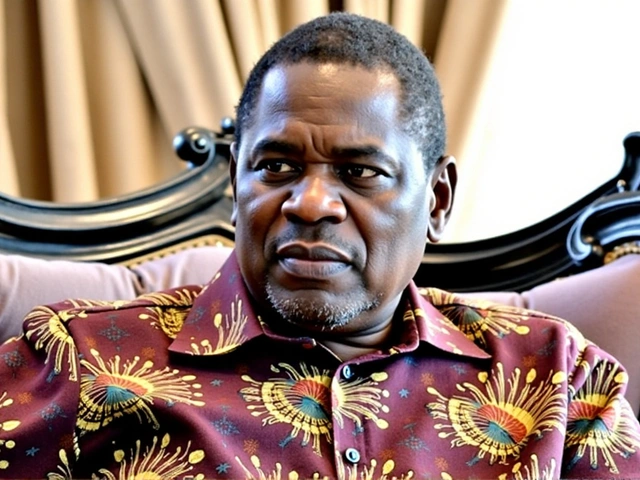
South African Deputy President Paul Mashatile Collapses Amidst Extreme Heat in N'waMitwa Village
During a speech at N’waMitwa Village's 16th anniversary event, South Africa's Deputy President Paul Mashatile collapsed due to extreme heat and suspected dehydration. Limpopo's Premier reassured the public about his stable condition. He was taken to a local hospital for precautionary checks.
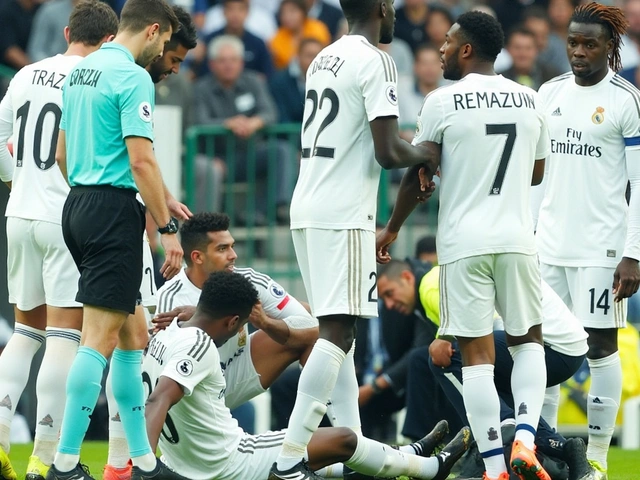
Real Madrid's Injury Woes Deepen During Clash Against Osasuna as Rodrygo and Eder Militao Exit Early
During a crucial La Liga match against Osasuna, Real Madrid faced significant challenges as key players Eder Militao and Rodrygo were injured in the first half. Despite these setbacks, Real Madrid held a 2-0 lead at halftime with goals from Vinicius Junior and Jude Bellingham. However, the injuries exacerbate Madrid's roster issues, adding to the already lengthy list of sidelined players.
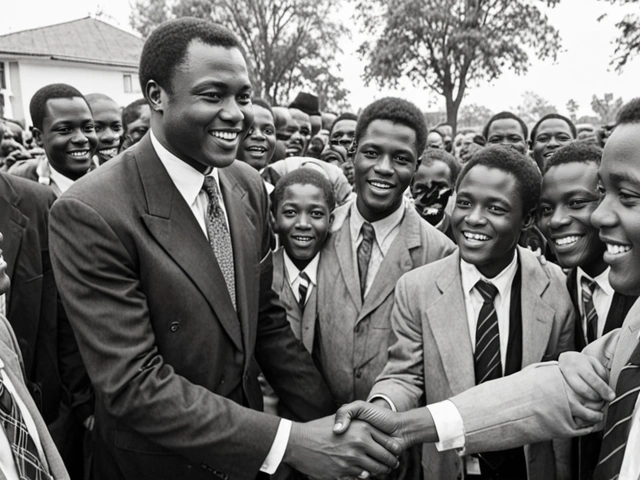
DCI Launches Investigation into Alleged Acquisition of Pistol Used in Tom Mboya’s Assassination
The Directorate of Criminal Investigations (DCI) has opened an inquiry into claims that Ndwiga Kathamba, a 92-year-old man, purchased the pistol used in the 1969 assassination of Tom Mboya. Kathamba alleges involvement by KANU youth members in a plot to eliminate Mboya and details his role in acquiring the weapons from the black market. These claims have prompted the DCI to investigate further.
Cheryl Jonah
December 21, 2025 AT 01:20They say Morocco spent $1.2 billion? Lol. That money went straight into the pockets of French contractors and CAF insiders. You think they actually built stadiums? Nah. They just painted over the same old concrete from the 90s and called it 'brand-new.' Watch how fast the pitch cracks after the first rain. And don't get me started on TotalEnergies - that's not sponsorship, that's colonialism with a logo.