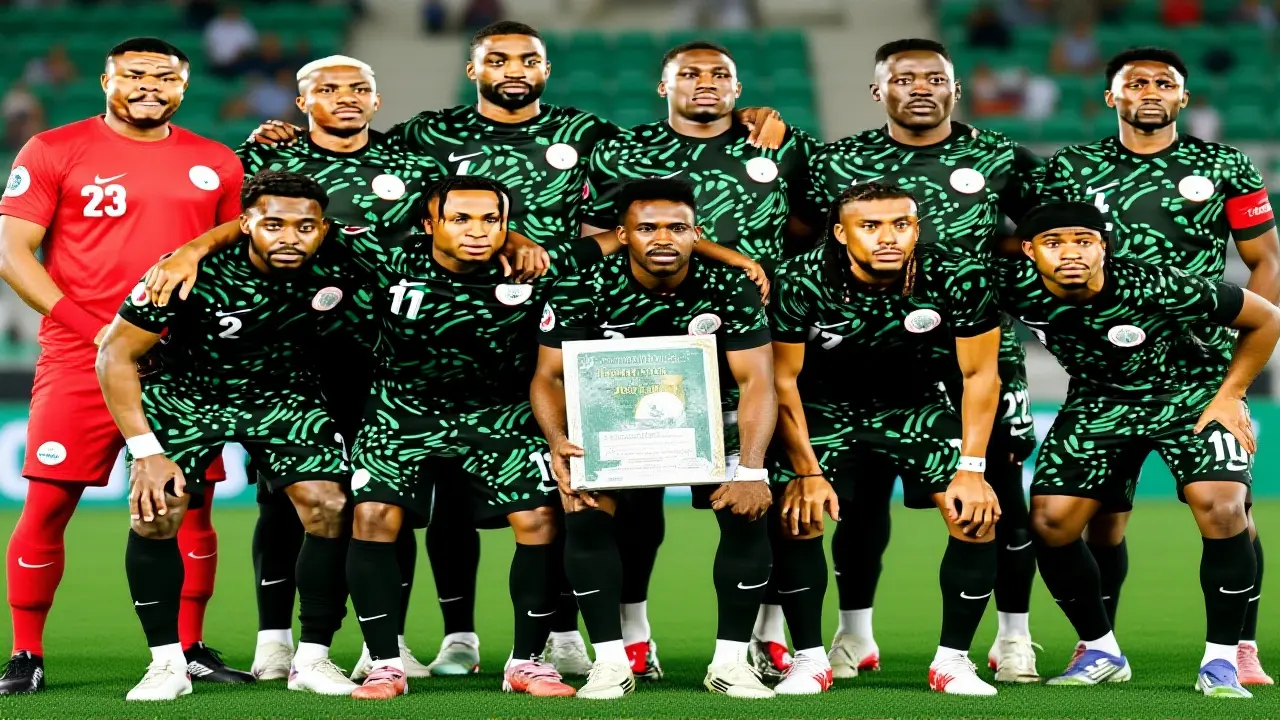
When FIFA released its latest world rankings on January 19, 2026, the football world took notice of a massive shift in African football. The Nigeria national team, widely known as the Super Eagles, surged from 38th to 26th place globally. This wasn't just a minor bump; it was their highest ranking in sixteen years.
The jump of exactly 12 spots came with a staggering gain of 79.09 points—the largest single-update increase for any nation on the planet. For fans who have watched the team struggle through inconsistent performances over the last decade and a half, this feels like a vindication. It’s the kind of result that turns heads in Lagos and London alike.
The AFCON Effect
Here’s the thing: you don’t move up the FIFA ladder by accident. This surge is directly tied to the team’s performance at the 2025 Africa Cup of NationsMorocco. The tournament, held earlier in the year, saw Nigeria finish in third place. While they didn’t lift the trophy, their consistency and quality of play sent a clear message to the ranking algorithm.
FIFA’s ranking system weighs recent results heavily, especially those in major tournaments. By securing bronze in Morocco, the Super Eagles accumulated enough coefficient points to leapfrog several established nations. TVC News highlighted that this 79.09-point gain was "the highest increase achieved by any nation in the latest update." That’s not hyperbole; it’s cold, hard data showing how much weight continental success carries in the global standings.
But wait—why does finishing third matter so much? Because in the modern game, consistency is king. Teams that regularly reach semi-finals or finals in AFCON demonstrate they can compete with the continent's elite. Nigeria did exactly that, proving they aren't just a one-hit wonder but a sustained force.
Africa’s New Power Trio
The ripple effects of this climb are felt across the continent. With Nigeria now sitting at 26th globally, they’ve cemented their position as the third-ranked team in Africa. Who sits above them? Senegal holds the top spot for the continent, followed closely by hosts Morocco.
This creates a fascinating dynamic. For years, Egypt dominated African football rankings. Now, the landscape has shifted. Algeria and Egypt complete the continent’s top five, but the narrative has changed. The rise of Senegal, the resurgence of Morocco, and now Nigeria’s return to form suggests a more competitive, multi-polar African football scene.
Interestingly, while Spain, Argentina, and France continue to lead the global standings, the gap between the top European/South American teams and the best African sides is narrowing. Nigeria’s jump to 26th puts them within striking distance of the top 20—a threshold often associated with genuine World Cup contention.
Why This Matters Beyond the Numbers
Let’s be honest: rankings can feel abstract until you see the impact. For Nigerian football, this isn’t just about bragging rights. A higher ranking means better seeding in future World Cup qualifiers and continental competitions. It attracts sponsorship interest and boosts player morale. More importantly, it validates the investment made in youth development and coaching structures over the past few years.
Remember when Nigeria last ranked this high? Sixteen years ago. Think about what happened in between. There were missed opportunities, internal conflicts, and periods of stagnation. To break out of that cycle requires more than luck; it requires structural improvement. The current squad, led by experienced campaigners and emerging talents, seems to have found a balance that previous iterations lacked.
Experts point out that the "impact of their AFCON exploits" extends beyond points. It signals to other African nations that competing at home soil (or in neutral venues) yields tangible rewards. It encourages federations to invest in preparation rather than relying on star power alone.
What’s Next for the Super Eagles?
The immediate question is: can they maintain this momentum? FIFA rankings fluctuate based on match outcomes. If Nigeria continues to perform well in upcoming friendlies and qualifiers, they could push into the top 20. But if results slip, the points will erode quickly.
The team faces crucial fixtures in the coming months, including World Cup qualifiers. Maintaining this level of performance will require tactical discipline and squad depth. Injuries and international club commitments always pose risks, but the foundation laid in Morocco gives them a buffer.
For now, the mood is optimistic. Fans are celebrating not just the number 26, but what it represents: a return to relevance on the world stage. As one fan put it, "We’re back where we belong." Whether that optimism translates into long-term success remains to be seen, but for January 2026, the Super Eagles are flying high.
Frequently Asked Questions
How many places did Nigeria climb in the January 2026 FIFA rankings?
Nigeria climbed exactly 12 places, moving from 38th to 26th in the world. This significant jump was driven by a 79.09-point increase, the largest single-update gain for any nation in that specific release.
Which event caused Nigeria’s ranking surge?
The surge was primarily caused by Nigeria’s strong performance at the 2025 Africa Cup of Nations (AFCON) in Morocco, where they finished in third place. Their consistent results throughout the tournament generated substantial ranking points.
Who are the top three African teams in the FIFA rankings?
As of the January 2026 update, the top three African teams are Senegal (1st), Morocco (2nd), and Nigeria (3rd). Algeria and Egypt follow in fourth and fifth place respectively, marking a shift from previous years where Egypt often led.
When was Nigeria last ranked 26th or higher?
This marks Nigeria’s highest ranking in 16 years. The previous time they achieved a similar standing was around 2010, during a period of relative stability and success for the national team before subsequent declines.
Does a higher FIFA ranking affect World Cup qualification?
Yes, indirectly. Higher rankings influence seeding in qualifying draws, potentially leading to easier initial groups. It also reflects a team’s competitive strength, which can boost confidence and attract better sponsorship deals.

Vusumuzi Moyo
I am a journalist specializing in daily news coverage with a keen focus on developments across Africa. My work involves analyzing political, economic, and cultural trends to bring insightful stories to my readers. I strive to present news in a concise and accessible manner, aiming to inform and educate through my articles.
19 Comments
-
Ghanshyam Gohel
June 7, 2026 AT 18:09It is indeed a remarkable achievement,; however, one must remain cautious about premature celebrations., The consistency required to maintain such a ranking is far more demanding than achieving it initially., We have seen this pattern repeat itself numerous times in Nigerian football history., Therefore, let us observe with measured optimism rather than unbridled jubilation., The structural reforms mentioned are promising, but tangible results on the pitch over an extended period will be the true metric of success., I am personally invested in seeing African football gain more global respect, so this step forward is welcome., Nevertheless, skepticism is a healthy companion to hope., Let us wait and see if the next six months validate this surge.
-
harsh gupta
June 9, 2026 AT 15:49oh sure, just another FIFA manipulation job. they always boost teams right before big tournaments to make the draw look interesting. nobody believes these rankings are real anymore. its all rigged by UEFA anyway.
-
lavanya tolati
June 9, 2026 AT 23:14i remember when we last felt this proud about the super eagles it was ages ago. seeing them compete at that level again brings back so many memories. the energy in lagos must be incredible right now. hope they stay consistent because we need this positivity
-
Sohni Bhatt
June 11, 2026 AT 17:04Let us not forget that while Nigeria celebrates this minor numerical adjustment, India continues to languish in the lower tiers despite having a population ten times larger, which speaks volumes about our lack of sporting culture and infrastructure compared to those who actually value discipline and hierarchy in their national development strategies, something we seem to lack entirely in our chaotic approach to everything including sports administration which is why we should perhaps focus on internal reform rather than celebrating other nations' temporary statistical anomalies that mean absolutely nothing in the grand scheme of global power dynamics where Europe and South America still dominate every single meaningful metric that actually matters to serious analysts who understand the game beyond superficial fanfare.
-
Prashant Sharma
June 11, 2026 AT 23:41the concept of 'ranking' is inherently flawed because it reduces complex human performance to arbitrary numbers. yet here we are discussing it as if it defines worth. nigeria's jump is statistically significant yes but does it change the ontology of their football? probably not. it just changes the spreadsheet. i find this obsession with metrics quite amusing really. it reflects a societal desire for order in chaos.
-
कमल कमल
June 13, 2026 AT 08:54Look at how everyone is cheering for Nigeria while ignoring the fact that Indian football has been systematically suppressed by cricket mania for decades 😒 They think a few wins in AFCON means they are world beaters but let me tell you something, without proper government support and cultural prioritization of football over cricket, no team can truly succeed, and India is proof of that, whereas Nigeria at least has a unified passion for the sport which allows them to climb these charts, even if I personally believe their style of play is too aggressive and lacks the finesse that European teams possess, but hey, whatever makes the fans happy I guess 🤷♂️
-
Jay Patel
June 15, 2026 AT 01:40The Super Eagles are flying high 🦅🇳🇬 This is what happens when talent meets opportunity. While others sleepwalk through tournaments, Nigeria executed. Respect the grind. 🙌⚽ #SuperEagles #FIFA
-
Mukesh Katira
June 16, 2026 AT 07:27it is good to see progress but we must ask ourselves what kind of progress this is. is it sustainable or just a blip? the moral implication of relying on tournament points rather than consistent league performance is questionable. yet formally speaking this is a positive outcome for african football representation globally.
-
Roop Kaur
June 16, 2026 AT 07:39the algorithmic bias in FIFA rankings is well documented among conspiracy theorists. they weight continental tournaments heavily to dilute european dominance but then suddenly african teams jump up? suspicious. also the jargon used in the article like 'coefficient points' is just simple math dressed up to sound complex. extroverts love to hype this up but introverts know the truth is hidden in the data gaps.
-
Ankita Bajaj
June 17, 2026 AT 20:01YES!!! let's go super eagles!! this is amazing news. i am so excited for them. let's keep supporting african football and show the world what we got. high five to everyone celebrating this moment!
-
Manish gupta
June 19, 2026 AT 13:00sure they jumped 12 spots but did they win the world cup? no. so why are we making such a big deal out of a number that changes every month? it's ridiculous. people have no perspective. it's just a game stop crying about rankings.
-
Abhijit Pawar
June 21, 2026 AT 03:57good result. keep it up. don't get cocky though.
-
Suresh Kumar
June 22, 2026 AT 04:29the nature of success is transient. today they are 26th tomorrow they might be 40th. the void remains. we project our desires onto these teams hoping they fill the emptiness within us. it is a philosophical exercise disguised as sports commentary. silence is better.
-
Pranav Gopal
June 23, 2026 AT 14:42it is important to recognize the effort behind this achievement. regardless of nationality this is a testament to hard work. let us encourage all athletes who strive for excellence in their respective fields. inclusivity starts with respecting diverse sporting cultures.
-
Nathan Lemon
June 24, 2026 AT 13:04As a cultural observer, I find this development intriguing. It highlights the shifting tides of soft power in Africa. Nigeria's resurgence is not merely athletic but symbolic of broader regional ambitions. The diplomatic implications of being ranked third in Africa could influence future bilateral engagements in sports diplomacy. A fascinating case study in modern geopolitics.
-
srinivasan sridharan
June 24, 2026 AT 17:00Oh, wonderful. Another ranking update. How thrilling. I suppose we must applaud them for existing above the bottom tier. Truly inspiring stuff. Not that any of this matters in the grand scheme of things. But sure, clap your hands little ones.
-
Indrani Dhar
June 26, 2026 AT 15:55they say its due to afcon performance but ive noticed the same officials getting richer every time nigeria plays well. coincidence? i think not. the system is designed to funnel money to the elite while the fans cheer blindly. typical corruption masked as sporting success. wake up sheeple
-
Raja Meena
June 27, 2026 AT 20:03while this is a positive statistic one must consider the ethical responsibility of the players to represent their nation with integrity. rankings are secondary to character. i hope the team maintains humility and does not let pride corrupt their values. moral standing is more important than numerical standing.


Write a comment
More Articles

The Recruit Season 2 Review: Engaging Developments in Netflix's Popular Spy Series
The Recruit Season 2 on Netflix offers a fresh take on the spy thriller genre, as CIA lawyer Owen Hendricks, played by Noah Centineo, navigates a perilous espionage scenario in South Korea. This season brings better pacing, enriched character depth, and a riveting storyline, making it a compelling watch. Balancing humor with action, it continues to explore moral and professional dilemmas faced within the espionage world.
SpaceX Crew-9's Historic Launch: Rescuing Astronauts from Extended ISS Mission
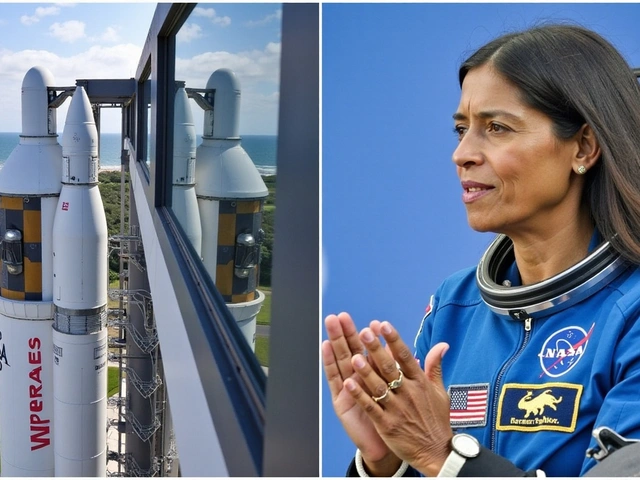
SpaceX's Crew-9 mission embarked on a critical rescue operation to bring back two NASA astronauts stuck at the ISS due to technical troubles with Boeing's Starliner. Setbacks and delays turned a brief mission into an eight-month ordeal, during which Sunita Williams took command of the ISS. The launch also marked SpaceX’s first astronaut mission from Launch Complex 40 at Cape Canaveral.

Significant Drop in Petrol and Diesel Prices Expected as Brent Crude Oil Weakens
Expect a noticeable decrease in petrol and diesel prices on Wednesday as Brent crude oil prices falter. With a stronger rand and increased oil production, motorists can look forward to paying less at the pump. The change reflects broader market shifts, including a gradual transition to clean energy.
Mike Gill
June 7, 2026 AT 13:36so happy for the boys! this is huge news. finally some good vibes in football after all that drama with the federation years ago. lets hope they keep it up and dont drop back down like usual lol